Friday, 20 September 2019

INTRODUCTION


TESL - Teaching English as a Second Language 

Educators to teach English to non-English speakers. 
The significant difference between these two certifications is the intended teaching location. 
TESL courses are geared toward teachers planning to teach English to speakers of foreign languages living in a native-English speaking country.
A TESL qualification is an advantage for teachers looking for work in English speaking countries, such as the United Kingdom, Canada, the United States, and Australia
Whereas TEFL is more geared toward teachers planning to relocate temporarily or permanently abroad, TESL is a suitable course choice for those looking to expand their careers within their current home country.
Once TESL-qualified, teaching job opportunities may include language support teaching for students in public or private English schools or positions as an English teacher within private language schools

MASTERING ENGLISH

WAY TO MASTER ENGLISH

1.SPEAK ENGLISH
Image result for speak english

2.PLAY WORD GAME
Image result for WORD GAME        Image result for WORD GAME

3.WATCH MOVIES WITH ENGLISH SUBTITLE

Image result for MOVIE     Image result for MOVIE    

4.READ ENGLISH BOOKS AND NEWSPAPER
Image result for book      Image result for newspaper

5.LISTEN TO ENGLISH SONG WITH LYRICS
Image result for SONG 

EXTRA VOCABULARY

EXTRA VOCAB


VOCABULARY


Thursday, 19 September 2019

LISTENING


ListeningListening skills are essential to many business roles and functions, including:


  • managing, coaching, mentoring, facilitation
  • sales, negotiation, arbitration, market research
  • appraisal, interviewing, training, consultancy


  • -beautybrains-


    ANOTHER IMPORTANCE OF LISTENING


    • Without listening, no organisation can operate effectively, nor ultimately survive. Effective listening provides the information required to enable organisations to adapt to meet the changing needs of customers and keep up with market trends.
    • Good listening and skilful questioning give a powerful message to those with whom you interact. They hugely increase your capacity to influence, motivate, develop or serve people effectively.
    • Listening and questioning are an inherent part of most life skills, fundamental to human interaction, and a major factor in the success of a good communicator.
    • Good listening allows us to demonstrate that we are paying attention to the thoughts, feelings and behaviours of the other person (seeing the world through their eyes). This is crucial to maintaining productive relationships, and sometimes the only way to establish communication


    - beautybrains -


    For more information on How To Enhance My Listening Skills, you may "click" the link and listen to the video by British Council .

    https://www.britishcouncil.my/exam/ielts/courses-resources/videos/listening

    VOWELS AND DIPHTHONGS

     Vowels
    •  A vowel is most often identified as a letter that is not a consonant. 
    • A vowel is any sound that a letter makes that is not a consonant sound.
    • There are five English vowels which are A,E,I,O, and U.


    Diphthong is a vowel sound in which the tounge changes position to produce the sound of two vowels. (Cambridge Advance Learner's Dictonary)

    The ‘phonemic chart’ is a set of symbols that represent all the sounds in spoken English


    SPEAKING


    According to Brown and Yule there are three function of speaking, “…three part version of Brown and Yule’s framework (after Jones 1996 and Burns 1998): talks as interaction: talk as transaction: talk as performance.


        • Talk as Interaction - To create a social relationship between you and other people through a spontaneous communication.

        • Talk as Transaction - To focus on the message that you are trying to convey, clearly and accurately.

        • Talk as Performance - To monolog better than dialog. For example, in a speech, public speakings or retell stories.


    How to Improve your English Skills


    Importance Of English


    For more information on How To Enhance My Speaking Skills, you may "click" the link and listen to the video by British Council .

    https://www.britishcouncil.my/exam/ielts/courses-resources/videos/pronunciation

    STRESSING THE INTONATION AND NEGOTIATING SKILLS

    Stress is the relative emphasis that may be given to certain syllables in a word, or to certain words in a phrase or sentence. In English, stressed syllables are louder than non-stressed syllables. Also, they are longer and have a higher pitch.

    English is a stress-timed language. That means that stressed syllables appear at a roughly steady tempo, whereas non-stressed syllables are shortened.

    In spoken language, grammatical words (auxiliary verbs, prepositions, pronouns, articles, …) usually do not receive any stress. 
    Lexical words, however, (nouns, verbs, adjectives, adverbs, …) must have at least one stressed syllable.

    There is no rule, however, about which syllable is stressed in a word with more than one syllable. You will need to learn the stress of words by heart

    ( ' = syllable to stress on)


    NEGOTIATING  is to have formal discussions with someone in order to reach an agreement with them.

    5 Tips for improving your negotiation skills

    • Recognize the power of thorough preparation
    • Take a proactive approach to negotiation training
    • Be ready to make mistakes
    • Practice, practice, practice
    •  Find a good negotiation coach
    3 Importance of Negotiating


    Why? Try you to figure it out by yourself by talking to some people about some topics and that's will be the moment you are going to realise whether you should learn or not the negotiating skills.

    Wednesday, 18 September 2019

    WRITING


    5 Ways to Improve Your Writing Skills
    1. Make an outline. Know what you are going to write about before you start writing.
    2. Acquire a solid understanding of basic grammar, style, and punctuation.
    3. Use the right vocabulary.Know what the words you are using actually mean.
    4. Understand the argument and critically analyze the evidence.
    5. Know how to write a proper conclusion that supports your research.


    Tuesday, 17 September 2019

    LINKING WORDS


    LINKING WORDS
    linking verb connects the subject with a word that gives information about the subject, such as a condition or relationship.


    PREPOSITION


    1. PREPOSITION OF TIME

    2. PREPOSITION OF PLACE


    3. PREPOSITION OF MOVEMENT


    DETERMINERS


    Definite (the) & Indefinate Articles (a, an)
    • Samples of articles:
    • 1.    The baby drank a bottle of milk.
    • 2.    
    Definite (the) & Indefinate Articles (a, an)
    • Samples of articles:
    • 1.    The baby drank a bottle of milk.
    • 2.    An apron is often worn by bakers.
    • 3.    The Shih Tzu is a popular breed of dog.
    • 4.    The girl suddenly broke into unstoppable tears as a sudden of epiphany hit her.


    Demonstrative Determiners
    Singular (this, that), Plural (these, those)
    • Samples of demonstrative determiners:
    • 1.    Look at this newspaper here.
    • 2.    That was a great evening!
    • 3.    Are these your pencils here?
    • 4.    That bottle over there is empty.
    • 5.    Jimin, take those folders and give them to me later.


    Possessive Determiners
    Possessive (my, your, his, her, its, our), whose (whose)
    • Samples of possessive determiners:
    • 1.    The woman removed her wig.
    • 2.    As his secretary, I need to do my job diligently.
    • 3.    Your trash is my treasure.
    • 4.    Whose child smashed into the car?


    Monday, 16 September 2019

    LITERARY ELEMENTS

       
    LITERARY ELEMENTS

    (BASIC)

    1.SETTINGS

    -Setting is the time and place in which event occur


    2.CHARACTERIZATION


    3.PLOT


    • EXPOSITION - The background information which includes the setting,tone,characters and other fact to understand the story
    • INCITING INCIDENT - The event or character that triggers the conflict.
    • RISING ACTION - A series of events that lead from the conflict to the climax
    • CLIMAX - The turning point,height of action,the moment of greatest interest
    • FALLING ACTION - The event which lead from climax to the conclusion
    • RESOLUTION - The end of the story.Conflict is resolved
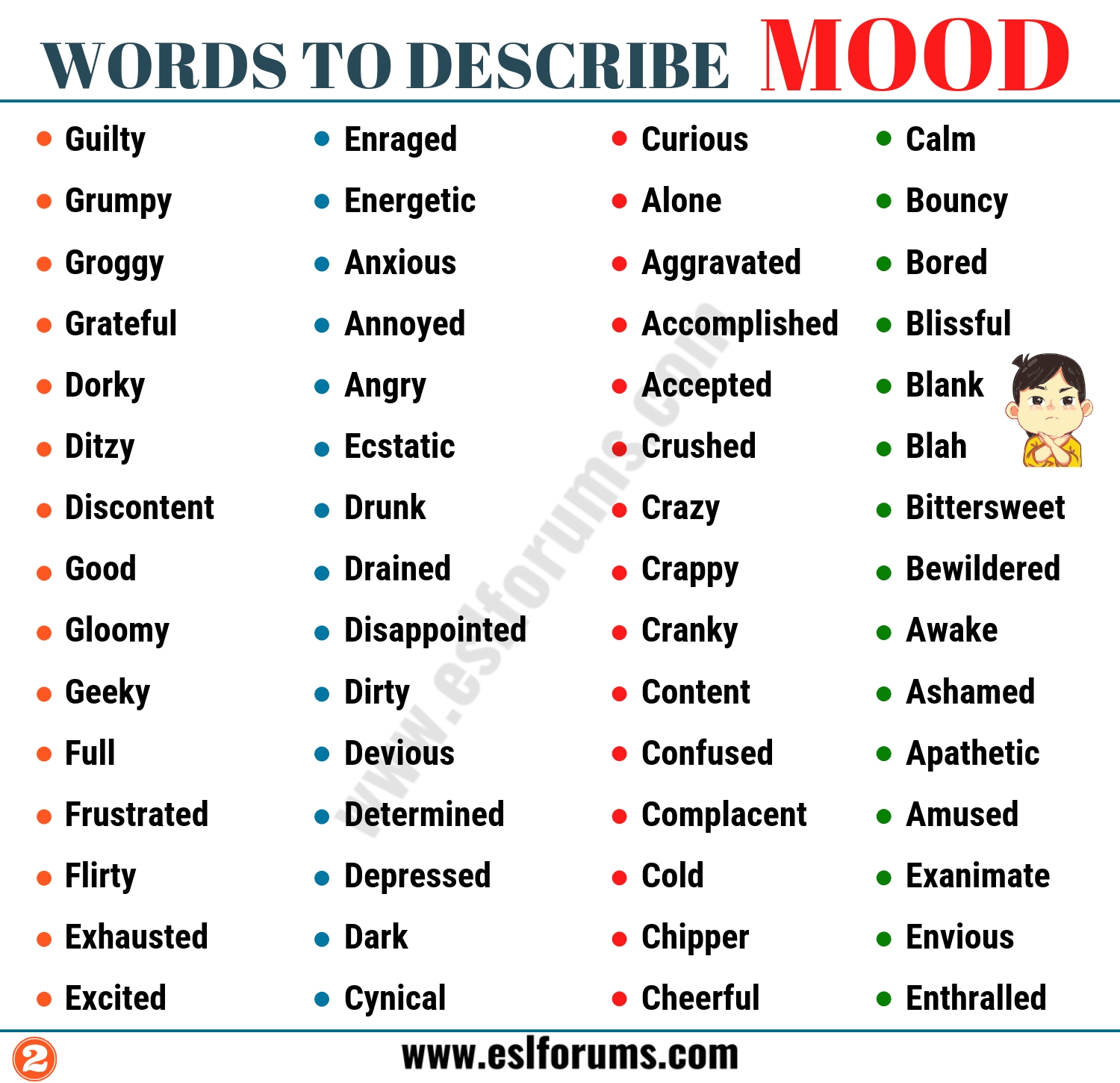
    4.MOOD 
    -The feeling in the story
    Image result for mood in literature list

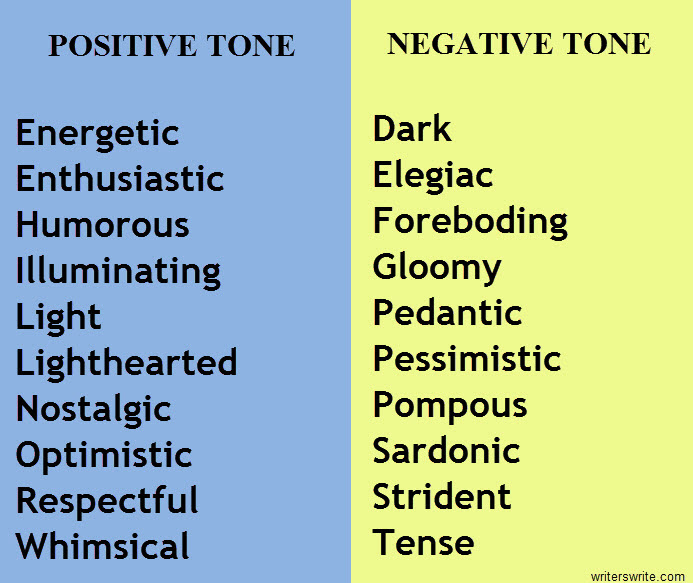
    5.TONE
    - Author's attitude towards a subject.
    Image result for TONE in literature list

    6.THEME
    -The main idea or lesson learned
    Image result for Theme in literature list


    FIGURE OF SPEECH

    Figure of speech


    SOUND DEVICES


    -SOUND DEVICES-
    Focus on the sound of words, rather than their meaning